How long does a project take?
I’m thinking of employing an architect – when do I need to start?
One of the most common questions clients ask is when they should involve an architect. The short answer is: earlier than most people expect.
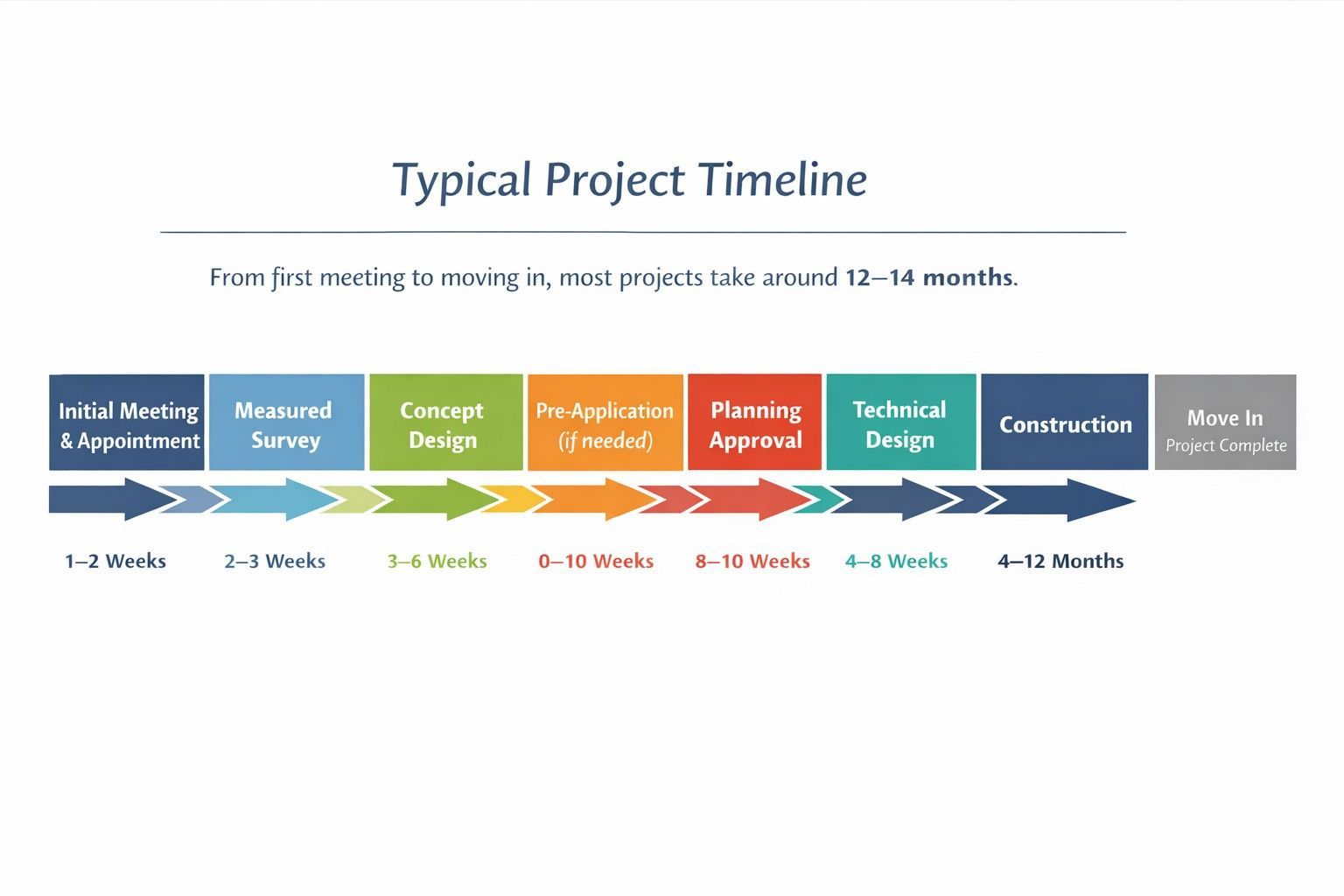
For a new home, extension, or major renovation, the full process from first meeting to completion on site typically takes around 12–14 months. Understanding this timeline early helps avoid rushed decisions, unrealistic expectations, and unnecessary stress later on.
Getting started and early preparation
Before design work formally begins, there is often a short lead-in period. This includes initial discussions, agreeing the brief, confirming budgets, and arranging surveys and consultants.
Depending on workload, this may be a couple of weeks or longer. We are normally able to start work within around a month, but it’s always worth making contact early to secure a place in the programme.
Survey work and early design
The project usually begins with a measured survey of your property or site. The site visit itself typically takes 2–5 hours, but the full survey stage usually takes 2–3 weeks, as the information is processed into accurate drawings and a 3D model.
Following this, initial design concepts are developed over 3–6 weeks. This is where your brief, budget, planning considerations, and long-term needs are tested together. We typically explore a number of options rather than presenting a single solution.
Clients often underestimate how long this decision-making stage can take, but time spent here is critical. Decisions made at this point set the direction for the entire project and help avoid costly changes later.
Pre-application advice and planning
Depending on the project and local authority, a pre-application enquiry may be recommended. This can add 6–10 weeks to the programme but often reduces risk later in the planning process.
Once a preferred design is agreed, the planning application is prepared and submitted. The statutory determination period is typically 8–10 weeks, although this can vary.
From a client perspective, this stage can feel slow, but planning approval is a major milestone. It establishes what can be built and significantly reduces risk before moving into detailed design.
Detailed technical design
After planning approval, the project moves into detailed technical design, typically over 4–8 weeks.
During this stage, drawings and specifications are developed to allow the project to be priced accurately, constructed properly, and approved by Building Control. The architect coordinates with other consultants, commonly including a structural engineer and an energy assessor.
Rushing this stage often leads to problems on site, unexpected costs, or delays during construction.
Tendering and appointing a builder
Once technical design is complete, the project is tendered to selected contractors. This process typically takes around 6 weeks.
Contractors need sufficient time to obtain prices from subcontractors and specialists. Allowing adequate time here usually results in more accurate pricing and better value, while rushed tenders often lead to higher costs and increased risk later.
Construction
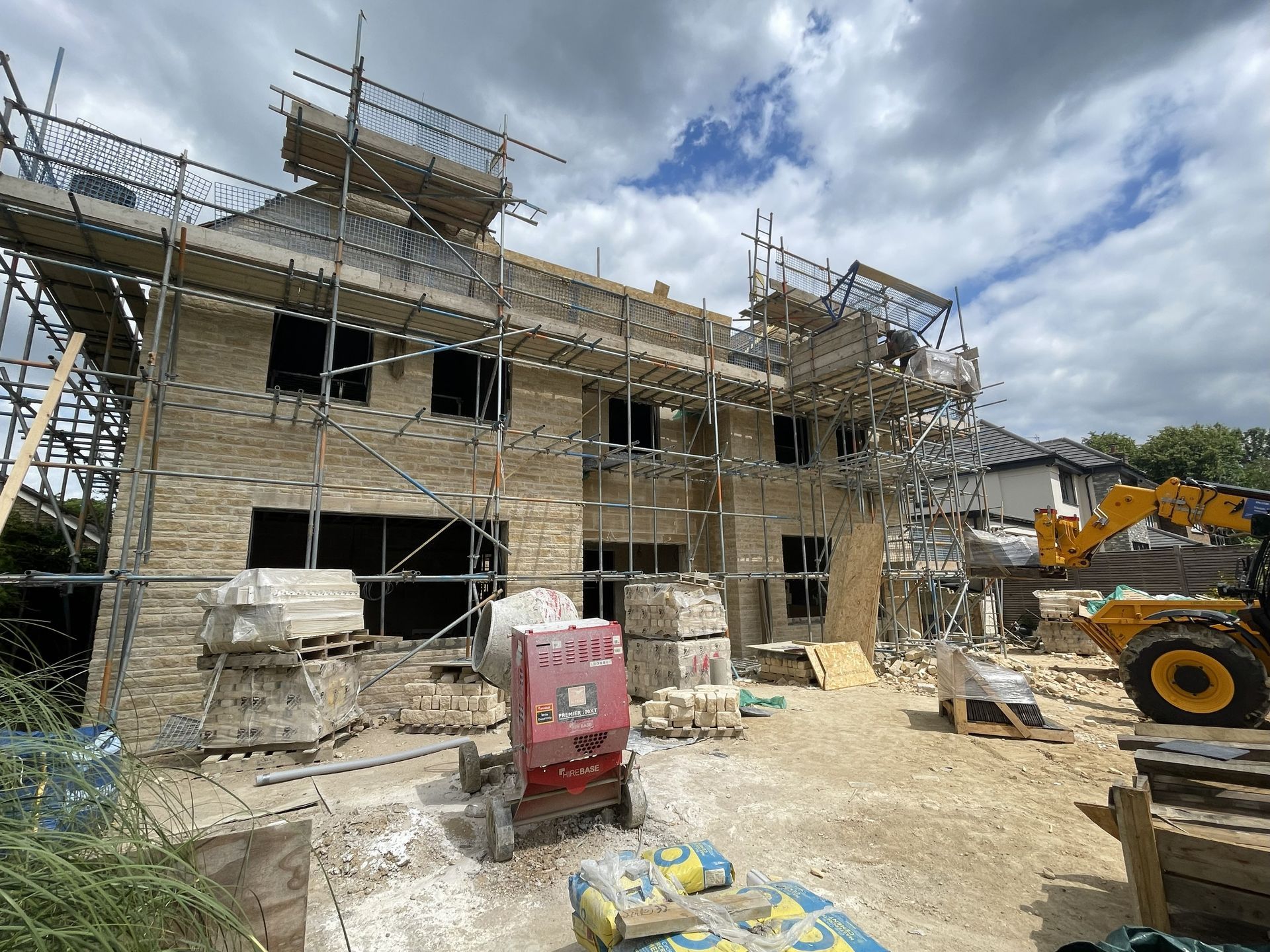
Once a contractor is appointed, a start date agreed, and contracts are in place, work begins on site.
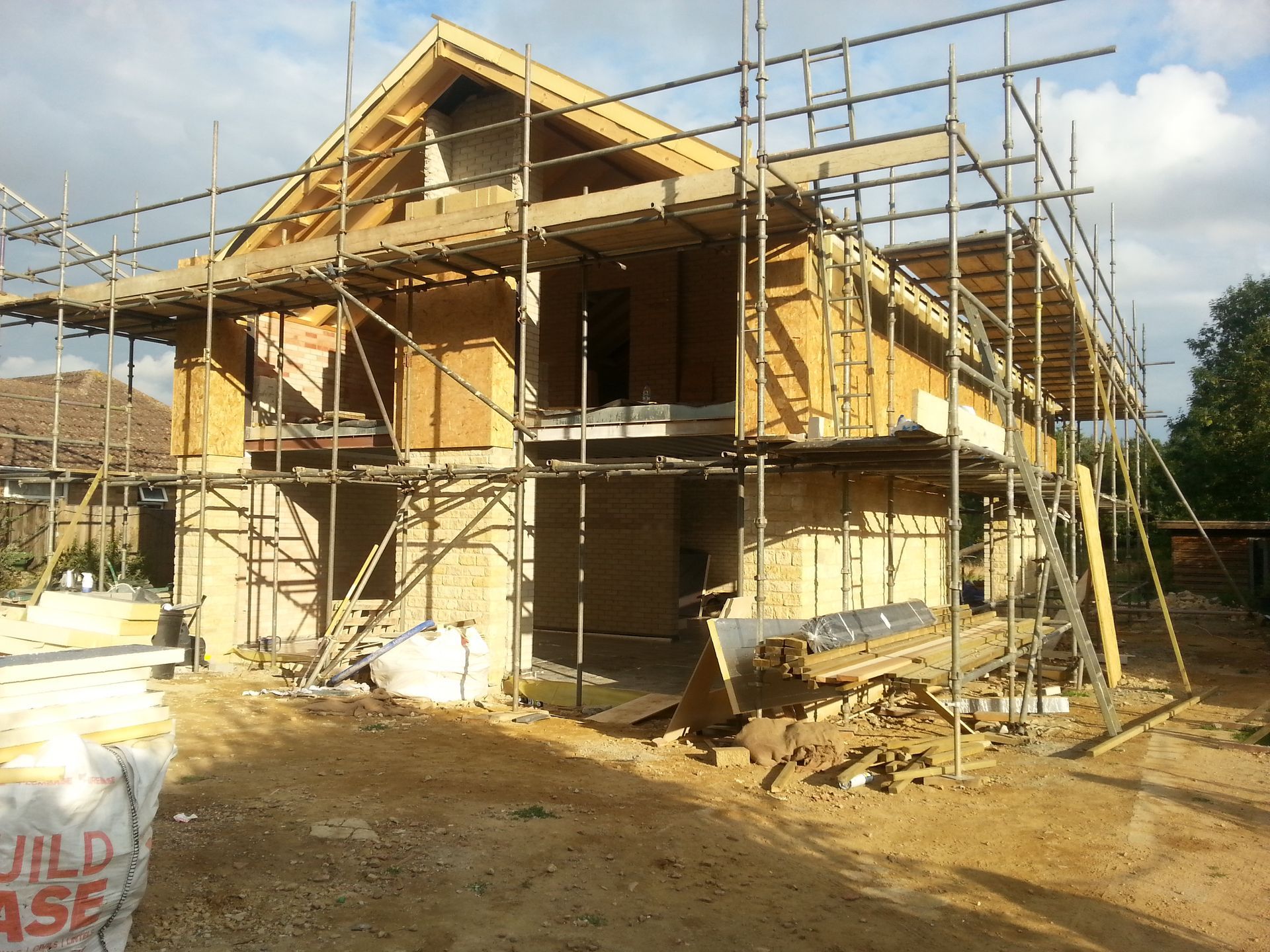
Construction timescales vary more than any other stage. Smaller or straightforward extensions may take around 4–6 months, while larger extensions, renovations, or new-build homes can take 9–12 months or longer.
During construction, progress and quality are monitored, issues are resolved as they arise, and the project concludes with snagging and handover.
So, how long should I allow overall?
From first meeting to completion on site, most projects take over a year, with construction forming the most variable part of the programme.
Final thought: start earlier than you think
Good projects benefit from time. Starting early allows for better design decisions, smoother planning, clearer costs, and a more controlled build on site.
If you’re even beginning to think about a project, it’s often the right time to speak to an architect.